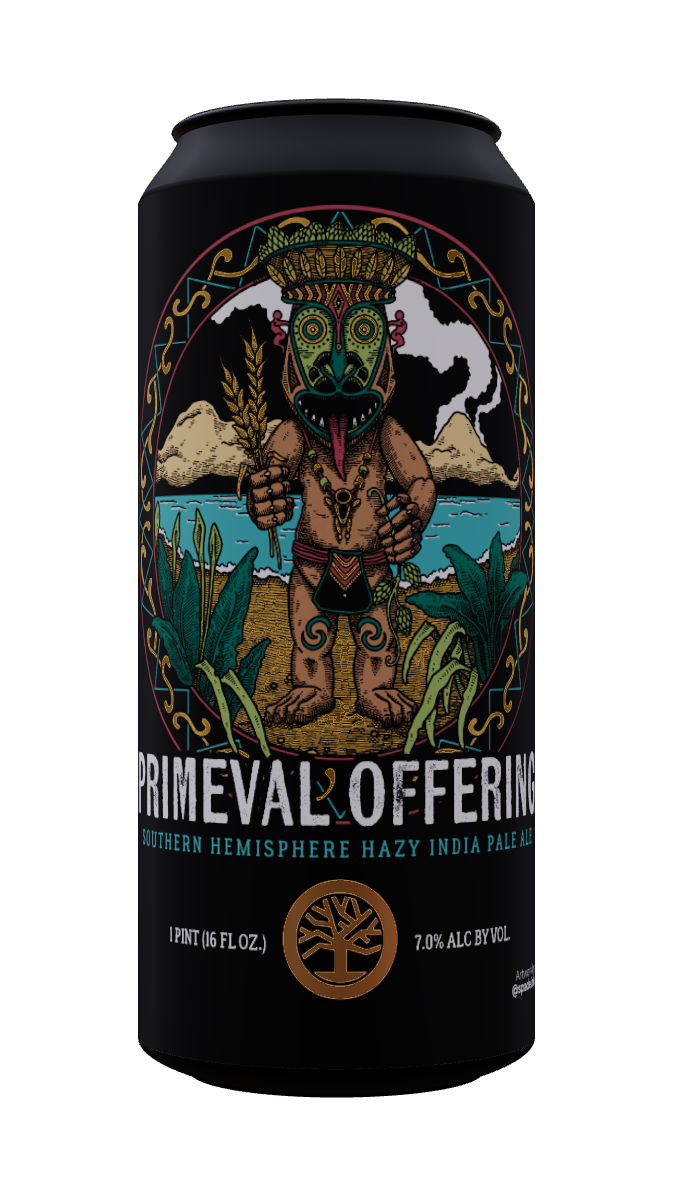
A sacrifice from lands below the equator, lush with pineapple, passionfruit, and stone fruit, veiled in permanent haze. It tastes of jungles that existed before human memory.
In the Polynesian world, before any meal was eaten, before any harvest was gathered, the first portion belonged to Rongo. Known as Rongo in Maori tradition and Lono in Hawaiian, he is the god of cultivated plants, of peace, of fertility, and of the rain that makes the earth generous. While his brothers Tu and Tangaroa governed war and the sea, Rongo presided over the gentler dominion: the kumara tuber pulled from dark soil, the breadfruit heavy on the branch, the gardens that sustained life between battles.
Rongo received the primeval offering, the first fruits of every harvest, placed on sacred ground before anyone else could partake. This was not mere ritual. It was an acknowledgment that cultivation itself is a gift. The rain falls because Rongo wills it. The soil yields because Rongo permits it. In the Maori tradition of Te Whare Wananga, Rongo ascended to the highest heaven to retrieve the knowledge of peaceful arts and agriculture, descending back to earth with the kumara itself, the sacred sweet potato that sustained entire civilizations.
The geography of this offering matters. Rongo belongs to the Southern Hemisphere, to the islands of Polynesia and the coastlines of Aotearoa. The hops in this beer, Nectaron and Rakau from New Zealand, Vic Secret from Australia, grow in the same soil and under the same stars that Polynesian navigators followed across the Pacific. This is not borrowed mythology. It is local.
Primeval Offering is Rongo’s harvest made liquid. A Southern Hemisphere Hazy IPA at 7.0% ABV, it delivers pineapple, passionfruit, and stone fruit through a dense, golden haze, lush as the gardens the god of peace tends in the rain. The first fruits have been laid before the altar. What follows is abundance.