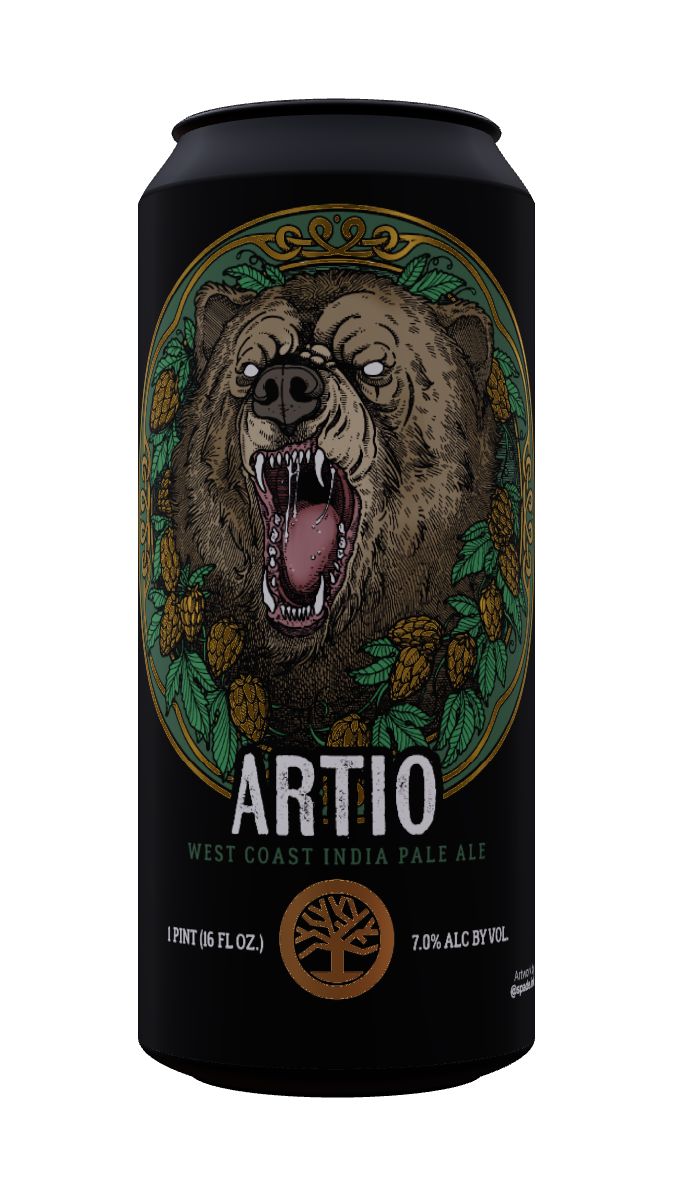
Named for the bear goddess of the Helvetii, fierce and untamed. Citrus and stone fruit claw through dank pine resin in a West Coast offering as primal as the forests she guards.
In 1832, a bronze statuette was unearthed near Muri, a village outside Bern, Switzerland. It depicted a seated woman facing a bear. Between them sat a tree laden with fruit, and the woman held a shallow bowl, perhaps an offering. An inscription identified her: Deae Artioni, to the goddess Artio. It was the confirmation of a deity long suspected from scattered inscriptions across the Celtic world, a bear goddess worshipped by the Helvetii, the tribal confederation that gave Switzerland its Latin name.
The name Artio derives from the Proto-Celtic word for bear, artos, the same root that gives us Arthur, the bear king. The Helvetii revered the bear not as a tame symbol but as the embodiment of the wilderness that surrounded their settlements. The Alpine forests were dense and immense, and the bears that moved through them were the largest predators on the continent. To worship Artio was to acknowledge that the forest did not belong to you. You lived at its edge by its permission.
Bern itself may take its name from the bear. The city has kept living bears since the fifteenth century, first in a pit, now in a park along the Aare River. The bear remains the city’s heraldic symbol. Artio’s influence, though the name was forgotten for centuries, never truly left.
Artio is brewed as the wild made liquid. A West Coast IPA at 7.0% ABV, it opens with citrus and stone fruit before driving into dank pine resin, the aromatic signature of deep forest. It is fierce, uncompromising, and deliberately untamed. Civilization can build its cities at the edge of the wood, but the wood does not retreat. The bear goddess watches from the treeline, and what she guards, no brewery, no city, no empire can claim.