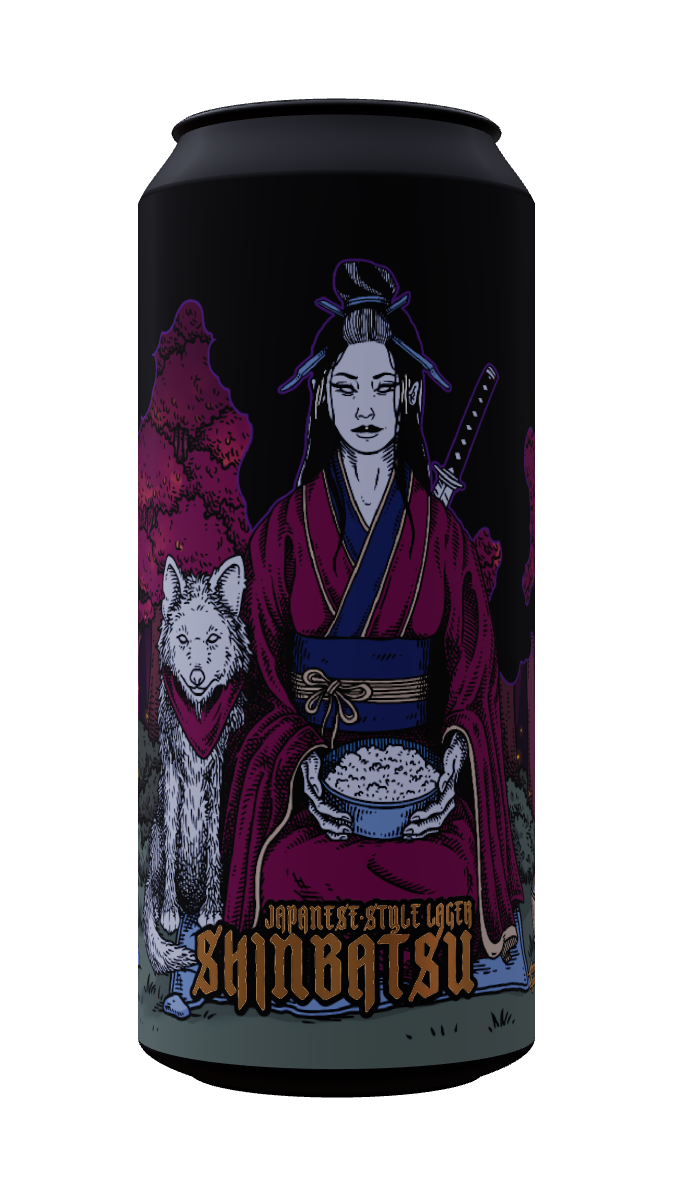
Divine punishment made gentle. Ripe melons, strawberries, and zesty orange drift through the zen-like calm of jasmine rice. A lager of absolute clarity and gold medal-worthy silence.
At the entrance to nearly every Shinto shrine in Japan, a pair of stone foxes stand guard, their eyes sharp, their mouths open or closed in the paired expressions of "a" and "un," the beginning and end of all things. These are the kitsune, the fox messengers of Inari Okami, one of the most widely venerated kami in all of Japan. Inari governs rice, prosperity, industry, and the worldly success that flows from diligent cultivation. More than a third of all Shinto shrines are dedicated to Inari. Fushimi Inari-taisha in Kyoto, with its ten thousand vermilion torii gates winding up the mountain, is merely the most famous.
Inari is neither strictly male nor female, appearing in different traditions as an old man carrying rice, a young woman with flowing hair, or a fox spirit itself. What remains constant is the domain: the rice paddy, the storehouse, the forge, the market. Inari is the kami of things that grow when tended and fail when neglected. And it is in that neglect that shinbatsu, divine punishment, finds its meaning.
Shinbatsu is not wrath. It is withdrawal. When offerings of rice and sake go unmade, when the shrines fall silent and the paddies are abandoned, Inari does not strike with thunder. The kitsune simply stop guarding the threshold. The harvest thins. The luck turns. The correction is quiet, almost gentle, but absolute. Balance must be restored, or the foxes will not return.
This Japanese-Style Rice Lager is the offering that brings them back. Brewed with jasmine rice in the tradition Inari protects, it carries ripe melons, strawberries, and zesty orange through a clarity so precise it feels devotional. OBA Gold, because Inari rewards those who tend their craft with the same discipline the kami demands. Every sip is a small restoration. Every glass, an offering made right.